


 Send Inquiry
 Send Inquiry
Rotary Airlock Valve
Price 40000 INR/ Unit
Rotary Airlock Valve Specification
- Working Temperature
- Up to 250C
- Port Size
- 100mm to 500mm (4 to 20)
- Body Material
- Stainless Steel
- Media
- other
- Dimension (L*W*H)
- Varies by model (e.g., 400mm x 350mm x 370mm for 10 size)
- Application
- Dust collection systems, pneumatic conveying, feeding, metering
- Usage
- Industrial
- Material
- Stainless Steel
- Power
- 1-3 HP
- Pressure
- Up to 1 bar
- Structure
- Rotary type with central rotor and compartment pockets
- Size
- 6 to 20 Diameter (Custom sizes available)
- Weight
- 65 kg to 320 kg (Varies with model)
- End Cover
- Flanged/Bolted (Removable for maintenance)
- Maintenance
- Easy-clean model available
- Drive
- Direct coupled or chain driven
- Inlet/Outlet Connection
- Flanged Standard (as per requirements)
- Feed Capacity
- 0.5 to 30 m3/hr
- Bearing Type
- Heavy duty ball bearing
- Seal Type
- Gland Packing or Mechanical Seal
- Number of Vanes
- 6/8/10 (Depends on model)
- Surface Finish
- Shot blasted/painted or mirror polished (SS)
- Rotor Speed
- 10-25 RPM (Adjustable depending on capacity and material)
Rotary Airlock Valve Trade Information
- Minimum Order Quantity
- 1 Unit
- Supply Ability
- 100 Units Per Month
- Delivery Time
- 10 Days
- Main Export Market(s)
- Asia, Australia, Central America, North America, South America, Eastern Europe, Western Europe, Middle East, Africa
- Main Domestic Market
- All India
About Rotary Airlock Valve
A Rotary Airlock Valve is a mechanical device used to control the flow of bulk materials between different components of a system while maintaining an airtight seal. It is commonly used in various industries, including food processing, pharmaceuticals, chemicals, plastics, and more. : The bulk material to be transported is fed into the inlet of the rotary valve. This can be done manually or through an automated feeding system. Rotary Airlock Valve is commonly used in applications where there is a need to control the flow of bulk materials between different pressure zones or to feed materials into a pneumatic conveying system. They are especially useful when handling powders, granules, pellets, and other similar materials.
Precision in Bulk Material Handling
Featuring adjustable speeds and multiple vane configurations, our rotary airlock valve delivers precise metering, feeding, and conveying of bulk materials in industrial processes. Whether handling powders or pellets, its sturdy stainless steel build and advanced sealing mechanisms ensure consistent performance and minimal leakage across diverse working conditions.
Built for Longevity and Easy Maintenance
Maintenance is simplified with easy-clean models, removable flanged or bolted end covers, and robust gland packing or mechanical seals. The direct coupled or chain-driven structure, paired with heavy-duty ball bearings, enhances operational reliability. High-quality surface finishes protect against corrosion, making the valve ideal for continuous, demanding industrial operations.
FAQ's of Rotary Airlock Valve:
Q: How does a rotary airlock valve support dust collection and pneumatic conveying systems?
A: The rotary airlock valve regulates the controlled release of material from dust collectors or hoppers into pneumatic conveying lines, maintaining airlock integrity and preventing loss of conveying air, which is crucial for system efficiency.Q: What materials and operating environments are these rotary valves suited for?
A: These valves are suitable for handling powders, granules, pellets, and dust in industrial settings. The stainless steel construction and variety of available finishes make them resilient to wear, corrosion, and high processing temperatures up to 250C.Q: When should I choose a 6, 8, or 10 vane rotor configuration?
A: Selecting the number of vanes depends on the required feed rate, material flow characteristics, and application needs. More vanes (e.g., 10) typically offer smoother flow and tighter sealing for fine powders, while fewer vanes are suitable for larger granules or pellets.Q: Where are rotary airlock valves commonly installed?
A: They are typically installed at the discharge of dust collectors, silos, hoppers, bag filters, or under process equipment requiring precise material discharge into pneumatic or mechanical conveying systems.Q: What maintenance processes are involved with this rotary airlock valve?
A: Simple maintenance is enabled by the removable end covers, easy-clean models, and robust sealing and bearing arrangements. Regular checks ensure optimal performance and minimal downtime, especially in heavy-use environments.Q: How does the adjustable rotor speed benefit my process?
A: Adjustable rotor speed (10-25 RPM) allows you to fine-tune the feed capacity based on your material's characteristics and system requirements, enhancing control, efficiency, and versatility for various applications.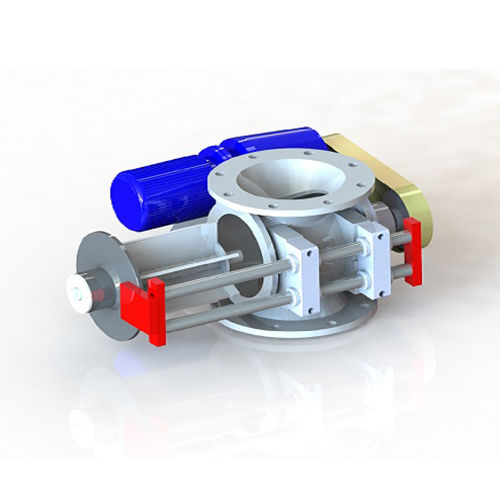

Price:
- 50
- 100
- 200
- 250
- 500
- 1000+

More Products in Airlock Valve Category
Rotary Airlock Valves
Price 35000 INR / Unit
Minimum Order Quantity : 1 Unit
Product Type : Rotary Airlock Valves
Power : Hydraulic Watt (w)
Material : Stainless Steel
Usage : Industrial

Developed and Managed by Infocom Network Private Limited.

